
Kia Telluride: Maintenance / Tires and wheels
Tire care
Proper tire maintenance is vital to ensure maximum driving safety, optimal vehicle handling, extended tread life, and peak fuel efficiency for your Kia Telluride. To achieve these results, you must consistently monitor cold tire inflation levels, adhere strictly to recommended pressure specifications, and stay within the designated vehicle load capacity and weight distribution limits.
Recommended cold tire inflation pressures
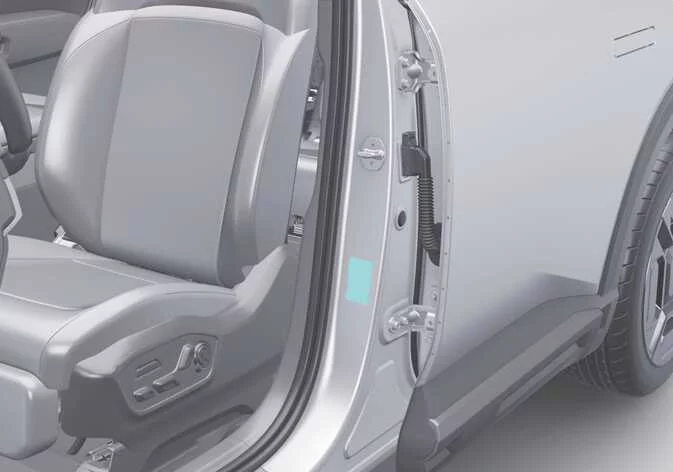
|
Factory specification details regarding recommended tire sizes and corresponding cold inflation pressures are printed directly on the tire information placard attached to the driver-side center pillar (B-pillar).
Neglecting to maintain proper tire inflation can cause uneven or premature tread wear, compromise vehicle cornering stability, degrade fuel economy, and increase the risk of wheel rim deformation. Furthermore, improper pressure leads to harsh ride quality, heightened vulnerability to road hazard damage, and severe risk of sudden tire blowouts.
WARNING
Tire underinflation
Inflate your tires according to the precise technical instructions provided in this manual. Check tire inflation pressure routinely with an accurate gauge at least twice a month and always prior to setting out on long-distance trips. Operating your Kia Telluride on underinflated tires compromises overall directional stability and severely overheats internal tire components. Overheating can lead to sudden structural degradation, tread separation, and catastrophic tire failure resulting in loss of control, severe injury, or fatal accidents. This danger escalates significantly during hot summer weather or extended periods of sustained high-speed highway driving.
TIP
Always inspect and measure inflation levels when tires are completely cold—meaning the vehicle has been parked in the shade for at least 3 hours or has been driven less than 1 mile (1.6 km) at low speed.
Maintaining correct cold inflation pressures guarantees optimal suspension dampening, crisp steering responsiveness, balanced braking performance, and minimal tread wear across all four wheels.
For complete details on factory pressure ratings and tire dimensions, consult the official Tires and wheels specification section.
Tire pressure
Adhere to these essential maintenance practices at all times:
-
Measure tire pressure exclusively when the tires are cold (allowing the vehicle to sit stationary for a minimum of 3 hours or driving under 1 mile / 1.6 km after starting).
-
Check the pressure of the spare tire simultaneously whenever inspecting the main road tires, ensuring it remains fully inflated and ready for emergency deployment: (if equipped)
-
Never exceed the Gross Vehicle Weight Rating (GVWR) of your Kia Telluride. Exercise careful judgment not to overload the interior cargo area or roof luggage rack: (if equipped)
-
Tires naturally warm up during operation, causing internal pressure to rise approximately 4–6 psi (28–41 kPa) above recommended cold baseline levels. Never bleed or vent air from warm tires to adjust pressure readings, as doing so leaves them dangerously underinflated once they cool down.
WARNING
Tire inflation
Both severe overinflation and underinflation significantly shorten overall tread lifespan, negatively alter steering dynamics, and trigger sudden structural tire failures. Operating under these conditions increases the likelihood of losing vehicle control, raising the risk of serious personal injury.
- Tire terminology and definitions
- Tire sidewall labeling
- Checking tire inflation pressure
- Tire maintenance
- Wheel alignment and tire balance
- Tire rotation
- Tire traction
- Tire replacement
- Wheel replacement
- All season tires
- Summer tires
- Snow tires
- Tire chains
- Radial-ply tires
- Low aspect ratio tires: (if equipped)
 12V parking lithium battery: (if equipped)
Certain configurations of the Kia Telluride feature a specialized auxiliary 12V parking lithium battery. This additional power unit delivers a constant and stable electrical supply to support background functions while parked, including Over-The-Air (OTA) system software updates, the automatic A/C d..
 Tire terminology and definitions
Refer to the following list for detailed definitions and technical explanations of key automotive terms found in tire descriptions and manual specifications for your Kia Telluride: Air Pressure The total force of compressed air inside the tire structure pushing outward agains..
Other information:
Kia Telluride (LQ2, 2027-2026) Owner's Manual: Driver Attention Warning settings
Driver Assistance Driver Attention Warning Leading Vehicle Departure Alert Inattentive Driving Warning While the vehicle is ON, tap Setup > Vehicle > Driver Assistance > Driver Attention Warning on the infotainment system screen to adjust the available DAW functions.
Kia Telluride (LQ2, 2027-2026) Owner's Manual: Intelligent Speed Limit Assist operation. Warning and control
Warning and control Intelligent Speed Limit Assist provides several warning and control functions designed to help the driver recognize posted speed limits and respond appropriately while driving the Kia Telluride. Depending on road conditions and system operation, the following features may be available: Displaying the speed limit Speeding warning Changing the set speed Auto set speed change TIP The warning and control functions of Intelligent Speed Limit Assist operate based on an Offset setting of "0".