Kia Telluride: Maintenance / Brake fluid. Checking the brake fluid level
Checking the brake fluid level
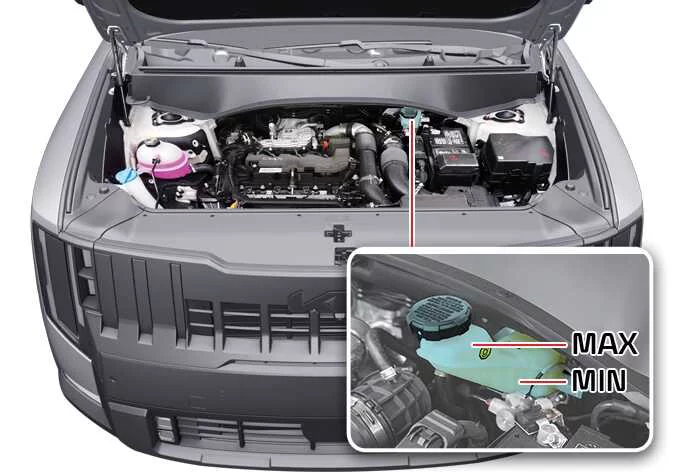
Inspect the hydraulic brake fluid level in the master cylinder reservoir regularly. The fluid line should sit consistently between the clearly marked MAX and MIN indicators on the exterior wall of the reservoir.
|
- To protect the sensitive hydraulic circuit against abrasive dirt and moisture contamination, clean the exterior cap and surrounding plastic surfaces thoroughly before opening the reservoir to add brake fluid.
-
Perform periodic checks to confirm that the fluid height in your Kia Telluride remains within the designated MAX and MIN range. Note that the fluid level will naturally decrease as vehicle mileage accumulates, which reflects normal, gradual wear on the brake pads and linings.
If the fluid level drops unexpectedly or drops below the minimum line, immediately have the braking system pressure-tested and inspected by an authorized Kia dealer.
Use only fresh hydraulic brake fluid that strictly complies with DOT 4 specifications. (Refer to the Recommended lubricants and capacities section for exact technical requirements.)
Never blend different fluid classes or mix incompatible brands together, as doing so alters boiling points and compromises braking safety.
WARNING
Brake fluid
Exercise caution when handling, inspecting, or topping off hydraulic brake fluid. Avoid contact with skin and eyes. If brake fluid accidentally splashes into your eyes, flush them immediately with large amounts of clean running water and seek prompt medical evaluation.
NOTE
Take care not to spill brake fluid onto painted body panels or plastic trim, as the fluid acts as a solvent and will strip the paint finish. Never use brake fluid from an opened container that has been exposed to ambient air for an extended period, because hydraulic fluid absorbs atmospheric moisture rapidly, reducing its boiling point. Dispose of old fluid properly. Never pour improper fluids into the brake reservoir; even a minor amount of mineral oil (such as engine oil) will destroy internal rubber seals and cause total brake failure.
WARNING
Loss of brake fluid
If the brake system shows a rapid drop in fluid level or requires frequent topping off, a hydraulic leak may be present. Have the vehicle towed or inspected immediately by an authorized Kia dealer.
 Engine coolant
The pressurized cooling system in your Kia Telluride features a heavy-duty translucent reservoir filled from the factory with premium year-round antifreeze coolant...
 Washer fluid. Checking the washer fluid level
Checking the washer fluid level The washer fluid reservoir on your Kia Telluride features a translucent plastic design, making it quick and simple to check fluid levels during routine under-hood inspections...
Other information:
Kia Telluride (LQ2, 2027-2026) Owner's Manual: Rear climate control
Rear temperature control button Rear AUTO (automatic control) button Rear climate control display screen Rear mode selection button Rear climate control OFF button Rear fan speed control button TIP If the rear temperature, rear fan speed, or rear mode is adjusted directly via the rear climate control panel, those specific settings will override previous configurations and operate independently, regardless of the current status of the front Kia Telluride climate control system.
Kia Telluride (LQ2, 2027-2026) Owner's Manual: 12V battery recharging
Should the 12V battery in your Kia Telluride become depleted or lose its charge, allow the engine to run continuously for at least 60 minutes, either by taking the vehicle for a drive or letting it idle safely in an open area. Alternatively, you can restore power by hooking up a fully automatic regulated smart charger directly to the dedicated jump-start posts located under the hood or connecting it straight to the 12V battery terminals.